

Biaka University Institute has today officially welcomed a new cohort of students into its academic community during its 2026 Matriculation Ceremony, an occasion that marked the beginning of a new chapter in the academic and professional journeys of the newly admitted students. The ceremony brought together members of the university administration, academic staff, students, clergy and distinguished guests, with a strong call for leadership, professionalism and excellence in today’s evolving academic environment. The formal proceedings began with an inter-religious service, reflecting the institution’s recognition of faith, unity and shared values as important elements in the development of responsible individuals and professionals. This was followed by the singing of the National Anthem and the BUIB Anthem, reaffirming the institution’s identity, national commitment and collective sense of belonging.
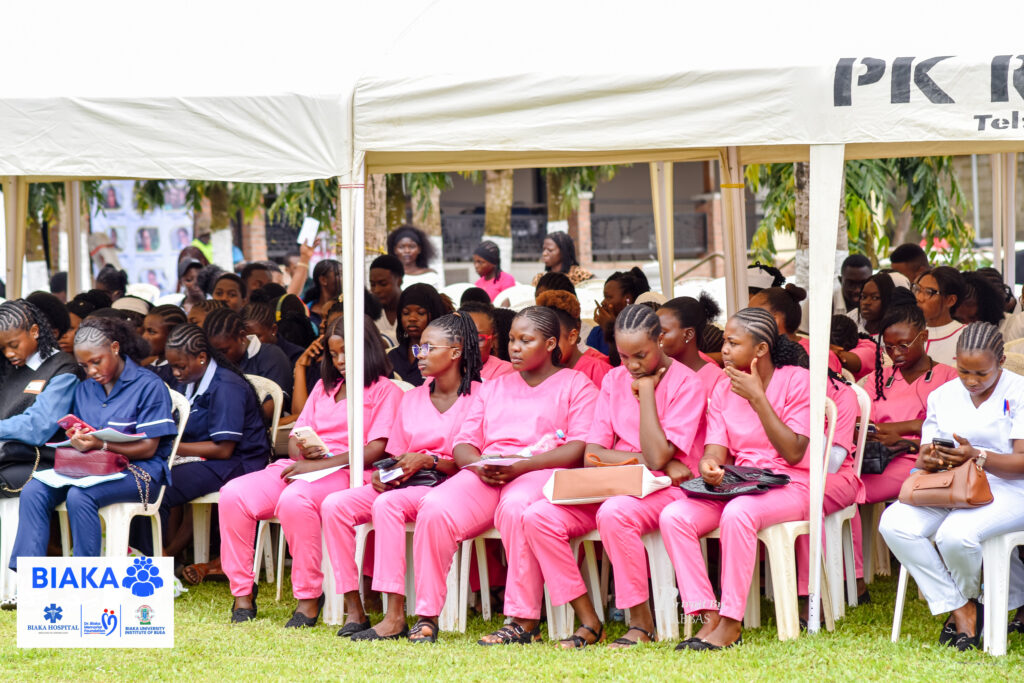

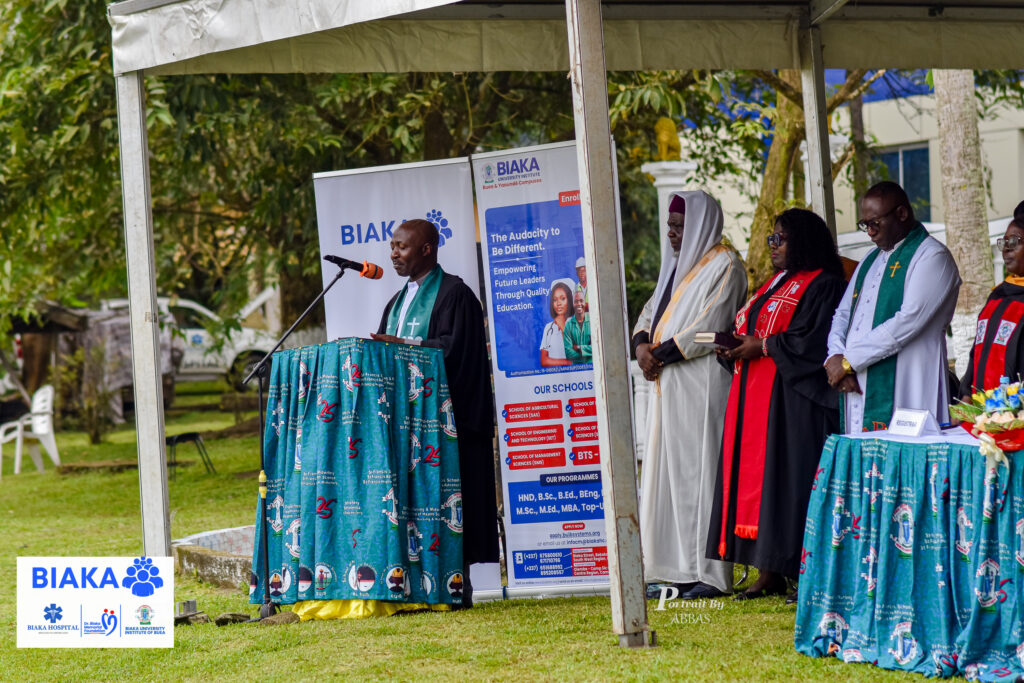
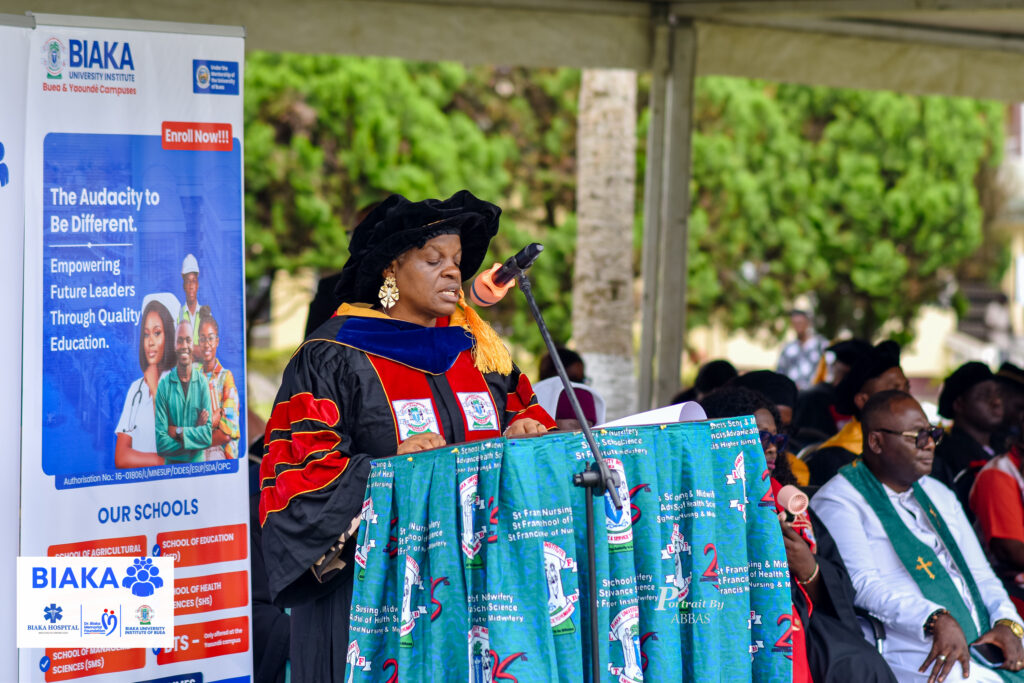
In her address, the Vice-Chancellor, Dr. Che Mary Lum, welcomed the new students into the university community and underscored the significance of the matriculation exercise in their academic journey. The occasion provided an opportunity to remind the students that gaining admission into a higher institution is not merely an achievement but also the beginning of a responsibility to pursue knowledge, uphold institutional values and prepare for meaningful contributions to society.
A major highlight of the ceremony was the presentation of the keynote discourse by the guest speaker, Professor Tanyi Lukong, who was introduced by Dr. Nemkul Samuel, Deputy Vice-Chancellor in charge of Academic Affairs.
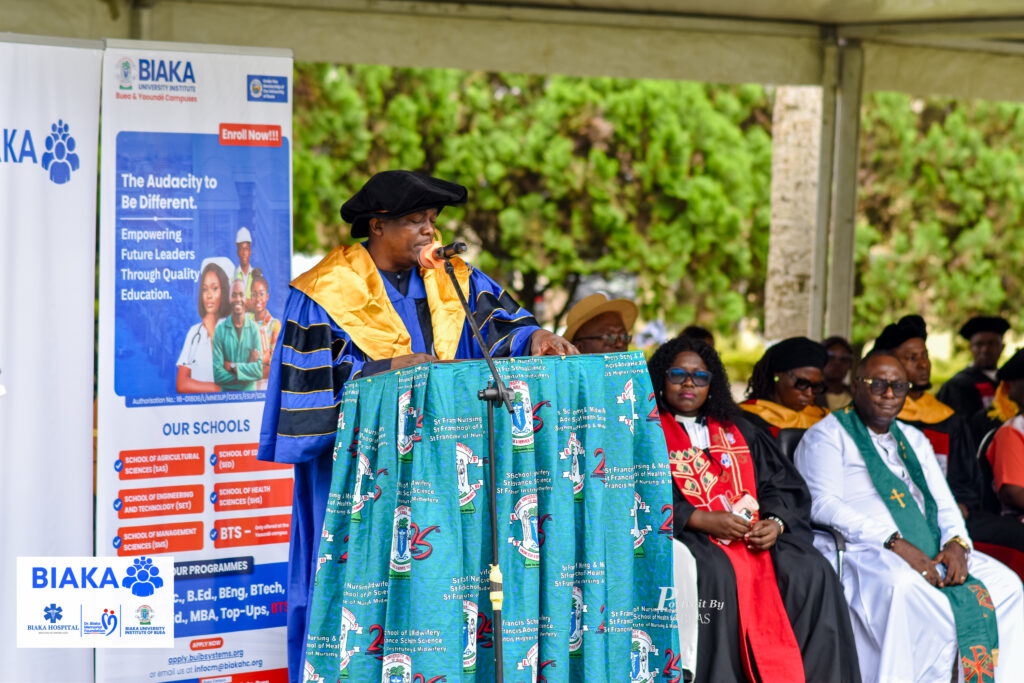
Speaking on the theme “Interdisciplinary Leadership and Professionalism in Today’s Academic World,” Professor Lukong addressed a subject of growing importance in contemporary higher education. His presentation placed emphasis on the need for academic institutions and their students to embrace approaches that transcend traditional disciplinary boundaries while cultivating the leadership qualities and professional values required to thrive in an increasingly interconnected world.
The theme was particularly relevant to the realities of modern education, where professional challenges and societal demands increasingly require individuals to draw knowledge and expertise from different fields. The ability to collaborate, communicate effectively, think critically and appreciate diverse perspectives has become essential for graduates seeking to make meaningful contributions in their respective professions.
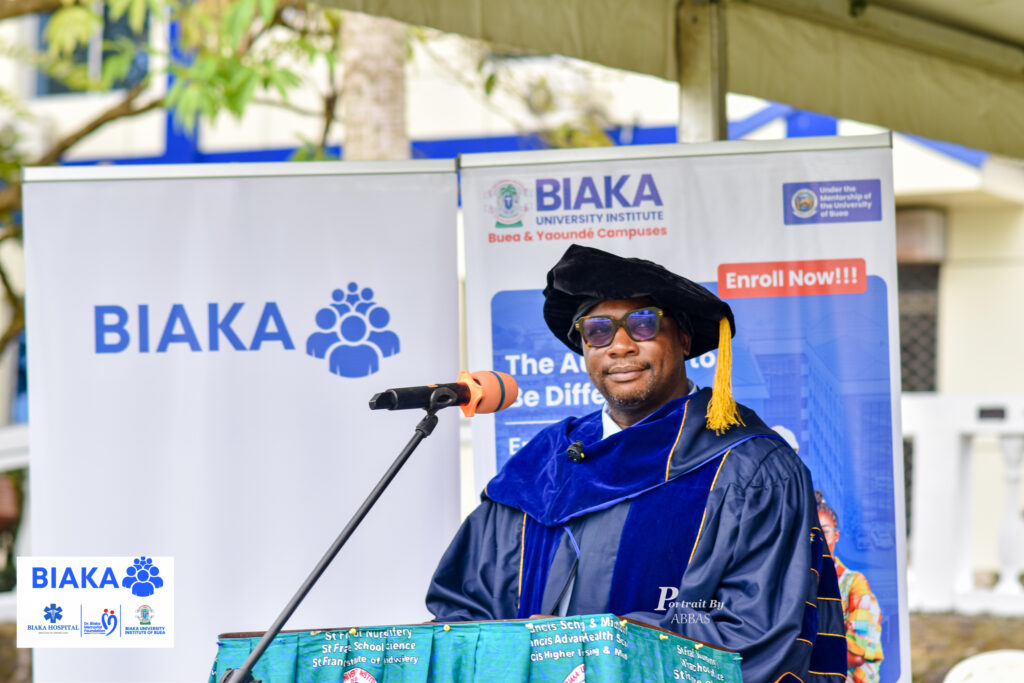
Professor Lukong’s discourse provided an important intellectual dimension to the matriculation ceremony, reminding the new students that academic success must go beyond the acquisition of certificates and qualifications. It must also be reflected in the ability to apply knowledge responsibly, work collaboratively and demonstrate integrity, adaptability and professionalism.
The emphasis on interdisciplinary leadership also resonated with BUIB’s broader commitment to developing graduates equipped for the demands of a rapidly changing professional landscape. As higher education continues to evolve, institutions are increasingly expected to produce graduates who are not only knowledgeable in their areas of specialisation but also capable of engaging with complex challenges across different sectors.
Following the guest speaker’s presentation and an interlude, attention shifted to one of the most significant moments of the ceremony: the administration of the Matriculation Oath by the Registrar, Mrs. Mercy Mankaa Epse Tening.
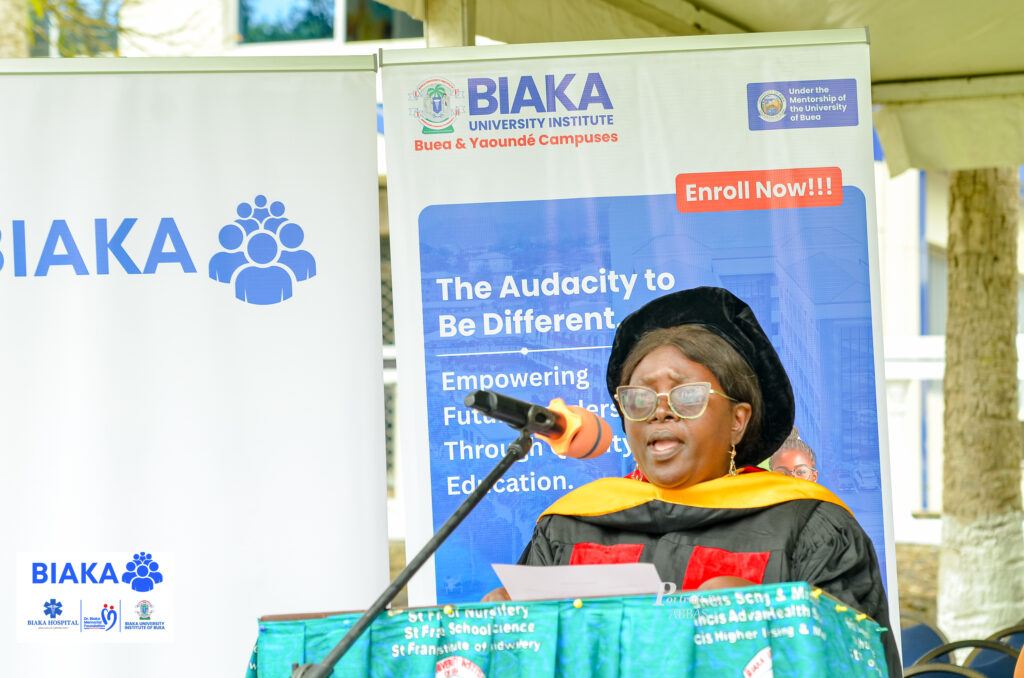
Through the oath, the newly admitted students formally pledged their commitment to the rules, regulations, principles and values governing the institution. This symbolic exercise marked their official entry into the BUIB academic community and reinforced the responsibilities that accompany the privilege of higher education.
The matriculation exercise represents more than a ceremonial tradition. It establishes a mutual understanding between the institution and its students, founded on discipline, mutual respect, academic integrity and a shared commitment to excellence. For the new students, it was a defining moment, signifying their transition into an environment where personal responsibility, intellectual curiosity and professional development are expected to go hand in hand.

The ceremony also featured an induction speech delivered by the student representative, offering the newly matriculated students an opportunity to reflect on their collective aspirations and the journey ahead. The address further highlighted the importance of solidarity, cooperation and active participation in university life. At BUIB, the matriculation of a new cohort represents a renewed commitment to the institution’s educational mission and its responsibility to prepare competent, ethical and socially responsible professionals. It also reinforces the importance of creating an academic environment where students are encouraged to discover their potential, develop their talents and translate their knowledge into practical solutions.

The institution’s leadership, under the guidance of its promoter, Dr. Hongla Francisca Epse Biaka Du Essex (Hon), and with the support of its Chancellor, the Pro-Chancellor, the Vice-Chancellor and the wider university administration, continues to provide direction towards the advancement of academic excellence and institutional development.
As the ceremony drew to a close with photographs, the newly matriculated students left with more than the memories of a formal university event. They departed with a renewed sense of belonging and an understanding of the expectations that come with being members of the Biaka community.
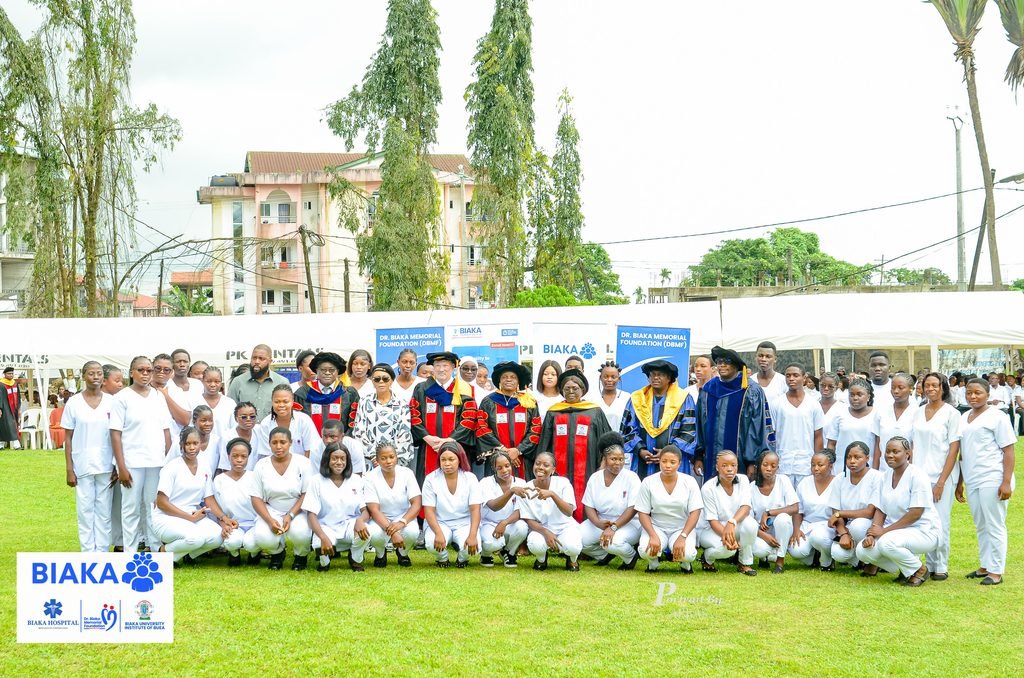
The 2026 Matriculation Ceremony therefore stood as both a celebration of new beginnings and a reminder of the responsibility that comes with education. With the message of interdisciplinary leadership and professionalism at its centre, the occasion challenged the new students to look beyond the classroom, embrace lifelong learning and prepare themselves to become responsible leaders and professionals.